ESG Reporting

Making impact measurable
Our data shows how we manage material flows, secure resources, generate energy, and reduce emissions. This makes our contribution to the circular economy visible and measurable.
Our non-financial metrics show the role we play as a partner for circular operations: securing strategic raw materials, supporting stable value chains, and reducing emissions.
Sustainability activities across our countries
Our strategic goal — and how we support it through sustainable action
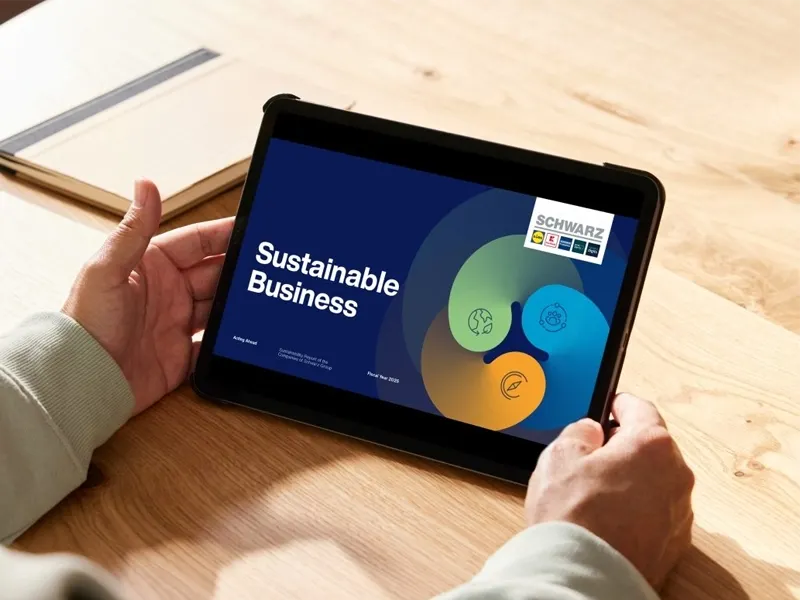

GRI index for PreZero (fiscal year 2025)
The GRI index shows where PreZero is covered in the Schwarz Group sustainability report, helping you find relevant content quickly and clearly.
Our circular economy success stories
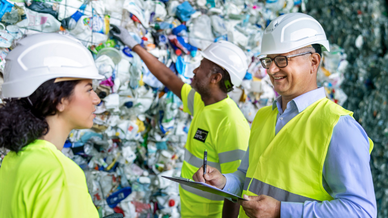
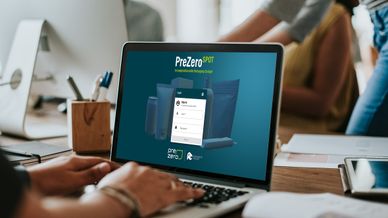

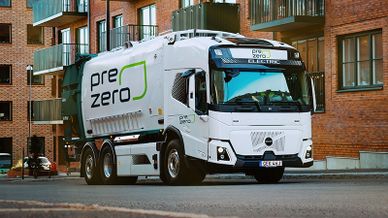
Measurable results of sustainable operations
Note on the assurance of selected non-financial metrics:
Metrics marked with an asterisk (*) were subject to limited assurance for the 2024 fiscal year as part of the external audit of the PreZero Group.
For the 2025 fiscal year, there will be no separate assurance for PreZero. The metrics shown are included in the audit of the Schwarz Group companies. A separate review for PreZero is planned again from fiscal year 2026 onward.
Further information on the assured metrics can be found in the external assurance report.
General information on the external audit can be found here.
Zero Waste
Making material flows visible and manageable
Zero Waste starts with transparency.
We capture waste volumes, analyze material flows, and identify suitable recovery routes. This creates the basis for returning valuable materials to the cycle and reducing avoidable waste.
Only what is measurable can be managed.
Resource security
Making secondary raw materials available
Resource security means keeping materials in circulation and making them available for industrial use as high-quality secondary raw materials.
This strengthens resource sovereignty in Europe and reduces dependence on primary raw materials that often need to be sourced through volatile markets and supply chains.
Through the circular economy, we create industrial resilience that helps companies become less dependent on global supply chains.
Materials
25.739.944 t total volume of valuable materials treated in internal and external facilities in fiscal year 2025.
Sorting
7.261.778 t materials sorted in fiscal year 2025.
Precise separation of material streams is essential for high-quality processing and a core part of our quality promise.
Recycling
8.165.782 t materials recycled in fiscal year 2025.
Breakdown:
Recycled Raw Materials
877.512 t recycled raw materials produced in fiscal year 2025.
Secondary raw materials help stabilize supply chains and reduce dependence on primary materials. Keeping materials in circulation also helps conserve natural resources.
Through high-quality processing, recycled materials are recovered as secondary raw materials and made available to industry for more sustainable production.
Breakdown:
Energy security
Energy from residual materials
Where material recovery reaches its limit, energy recovery follows as the final option in the cycle. This contributes to energy sovereignty in Europe.
5.158.412 MWh energy generated in fiscal year 2025.
Breakdown:
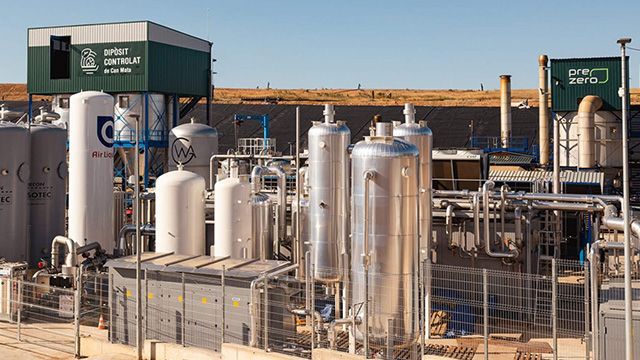
997.418 MWh renewable energy
By using non-recyclable waste for energy recovery, electricity and process steam can be generated. This helps replace primary energy sources such as coal and gas. Since around 50% of the waste used is of biogenic origin, the corresponding share of the energy generated is considered renewable.
Data & Compliance
Systems for transparency
Regulatory requirements are increasing — especially around recyclability, recycled content, and emissions reporting. Sustainability data is becoming business-relevant data that allows resource risks to be assessed more precisely.
Our systems capture and structure material flows and CO₂e data, creating the basis for reporting, audits, and informed decisions.
These sustainability metrics are brought together in ESG reporting and made accessible for greater transparency and more targeted management.
Building on this, we support companies with solutions such as WasteEcoSavings, Packaging Consulting, and Zero Waste strategies to manage data and measures in a structured way.
![[AI-generated] Eine abstrakte 3D-Illustration zum Thema Dekarbonisierung auf mintgrünem Hintergrund. Sie zeigt den Übergang von einem unteren, dunklen Ring mit schwarzen Molekülstrukturen (symbolisch für fossile Brennstoffe/CO2) hin zu einem oberen, leuchtend weißen Ring und einer schwebenden Lichtwolke mit einem kreisförmigen Pfeil, der den Prozess der Kreislaufwirtschaft und Reinigung darstellt](https://prezero.img.schwarz/juU_ZswfCnfSJTLLJNAXIMLMRORbgDzjT-FZpq_3BeA/ai:t/dpr:1/h:618/rt:fill/w:927/aHR0cHM6Ly9wcmV6ZXJvLWNtcy5vYmplY3Quc3RvcmFnZS5ldTAxLm9uc3RhY2tpdC5jbG91ZC9wcmV6ZXJvL2ltYWdlcy8xLzYvMy8wLzI0MDAzNjEtMi1nZXItSU5UL2I0MWQ4ZTE5ZDI4YS1QcmVaZXJvX0RlY2FyYm9uaXphdGlvbl9IZXJvLS53ZWJw)
PreZero climate strategy
PreZero starts from a different position than the other Schwarz Group companies. As a circular economy company, we operate energy-intensive facilities and logistics processes. This means some CO₂e emissions are technically unavoidable because they result directly from necessary waste treatment.
Our contribution to the Schwarz Group companies' net-zero target:
We work continuously to reduce these emissions while managing growth so that additional emissions are kept to a minimum. Specifically, we aim to limit the increase in our own Scope 1 and 2 emissions to no more than +20.5 percent compared with 2019.
PreZero Carbon Footprint
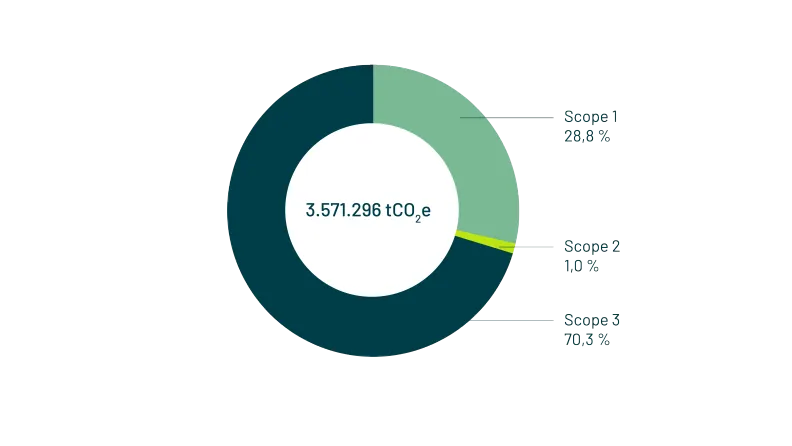
- Scope 1 1.026.871,76 tCO2e
- Scope 2 34.985,62 tCO2e
- Scope 3 2.509.438,61 tCO2e
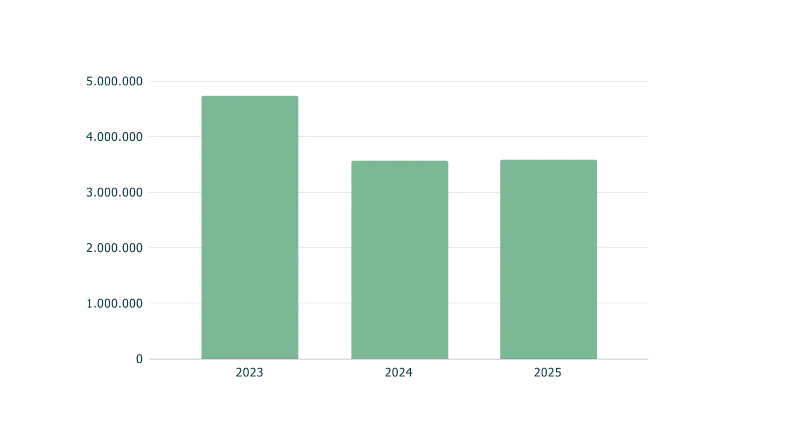
- 2023 4.722.288,15 tCO2e
- 2024 3.554.338,79 tCO2e
- 2025 3.571.295,99 tCO2e
Our CO₂e emissions have decreased by 24.37 % over a three-year period—an achievement attributable to targeted reduction measures and greater data transparency.
Avoided Emissions
Climate contribution through circular systems
Avoided emissions arise where circular solutions replace energy-intensive primary production. This happens when recycled materials substitute primary raw materials or when energy is generated from organic waste instead of fossil energy sources.
We are developing a methodology to quantify these contributions in a transparent and traceable way.
Logistics
More than 12.000 vehicles includes the PreZero Group fleet.
Employees
Our operational strength
Circularity at industrial scale depends on qualified employees and stable processes.
Our approx. 30.000 employees across Europe work every day to make sure raw materials are not lost as waste, but returned to the material cycle.
Every one of them is a #PreZeroHero to us.
ISO management systems
ISO certifications show that our processes and products are reviewed regularly and meet defined requirements for quality, environmental management, and safety.
The graphic below shows the current certification status across PreZero sites.
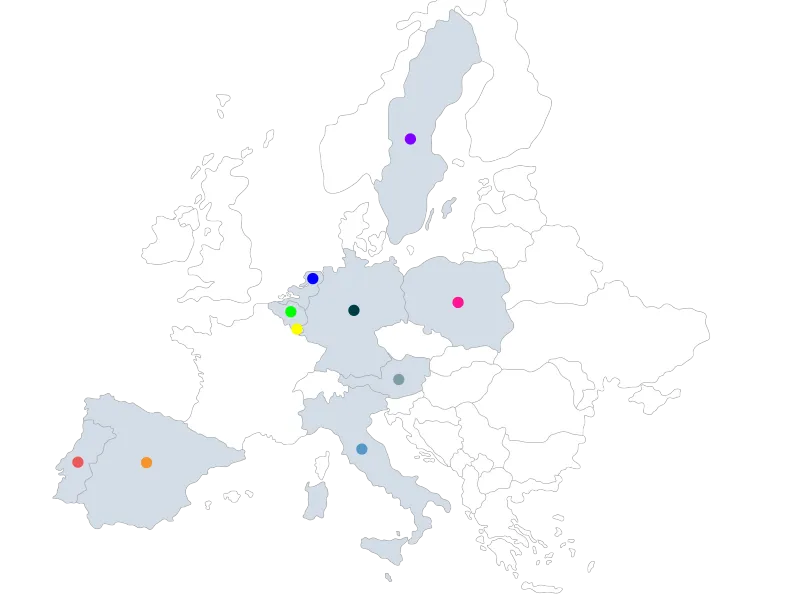
- ISO 14001 – Environmental management
- ISO 45001 – Occupational health and safety
- ISO 9001 – Quality management
- ISO 50001 – Energy management
These standards form the basis for continuous improvement, legal compliance, and the active involvement of our employees. They help us use resources efficiently, reduce risks, and meet high standards for quality and safety across Europe and all our sites.
| Country | ISO management systems | |
 | Belgium | ISO 9001, ISO 14001 |
 | Netherlands | ISO 9001, ISO 14001, ISO 45001 |
 | Sweden | ISO 9001, ISO 14001, ISO 45001 |
 | Luxembourg | ISO 9001, ISO 14001, ISO 45001 |
 | Spain | ISO 9001, ISO 14001, ISO 45001 |
 | Portugal | ISO 9001, ISO 14001, ISO 45001 |
 | Germany | ISO 9001, ISO 14001 |
 | Poland | ISO 9001, ISO 14001, ISO 45001 |
 | Austria | ISO 9001, ISO 14001, ISO 50001 |
 | Italy | ISO 9001, ISO 14001 |
Note on certification coverage: The certifications displayed cover at least 90% of the locations in the respective countries. For Germany, the country-specific "Entsorgungsfachbetrieb" (EfB) certification (specialized waste management company) is used instead of ISO 14001.
Our responsibility
Compliance with applicable law is the basis of sustainable business at PreZero. Across our supply chain, we are committed to fair business practices, transparency, good working and living conditions, human rights, and environmentally responsible behavior. More information on this topic can be found here.
Questions about our non-financial metrics? Get in touch.
If you would like to explore our non-financial metrics in more detail or have specific questions about the published data, use our contact form to get in touch.
We look forward to hearing from you and will get back to you as soon as possible.
General notes on the external audit
* On this page have already been audited with a limited assurance as part of the PreZero Group audit.

![[AI-generated] PreZero Grafik zum Thema vermiedene Emissionen: Vergleich der CO2-Reduktion durch nachhaltige Kreislaufwirtschaft in Glaszylindern](https://prezero.img.schwarz/gddlylY8yv1ySLuR6Ui-Ndqy0vYW9IepTgpSbEqCIRI/ai:t/dpr:1/h:294/rt:fill/w:523/aHR0cHM6Ly9wcmV6ZXJvLWNtcy5vYmplY3Quc3RvcmFnZS5ldTAxLm9uc3RhY2tpdC5jbG91ZC9wcmV6ZXJvL2ltYWdlcy80LzEvNC8wLzI0MDA0MTQtMS1nZXItSU5UL2RkMTlkY2RmZmYxZC1QWl9JbnRfQXZvaWRlZF9FbWlzc2lvbnNfODAweDYwMC53ZWJw)
![[AI-generated] Eine abstrakte 3D-Illustration zum Thema Dekarbonisierung auf mintgrünem Hintergrund. Sie zeigt den Übergang von einem unteren, dunklen Ring mit schwarzen Molekülstrukturen (symbolisch für fossile Brennstoffe/CO2) hin zu einem oberen, leuchtend weißen Ring und einer schwebenden Lichtwolke mit einem kreisförmigen Pfeil, der den Prozess der Kreislaufwirtschaft und Reinigung darstellt](https://prezero.img.schwarz/Ua9j2zQwY4oxvg7QOtr-A2Vy8F6yiBz0YXPG0MfJu3I/ai:t/dpr:1/h:294/rt:fill/w:523/aHR0cHM6Ly9wcmV6ZXJvLWNtcy5vYmplY3Quc3RvcmFnZS5ldTAxLm9uc3RhY2tpdC5jbG91ZC9wcmV6ZXJvL2ltYWdlcy8xLzYvMy8wLzI0MDAzNjEtMi1nZXItSU5UL2I0MWQ4ZTE5ZDI4YS1QcmVaZXJvX0RlY2FyYm9uaXphdGlvbl9IZXJvLS53ZWJw)