Tiny Fly, Huge Impact: PreZero and AWN Plan Europe’s First Industrial Insect Biorefinery
18.03.2026
Black soldier fly larvae are turning food waste into valuable protein — Deutschlandradio visits PreZero's site in Neckarsulm.
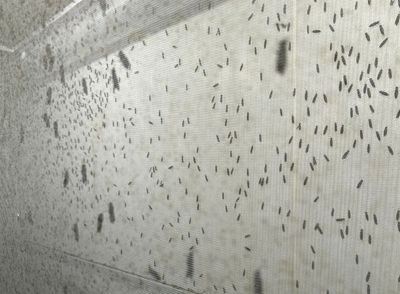
What can a small insect do for the big goals of the circular economy? Quite a lot. PreZero, the circular economy company of the Schwarz Group, is planning to build Europe’s first industrial insect biorefinery together with AWN, the waste management company of the Neckar-Odenwald district. The facility, to be built at the Sansenhecken site in Buchen, will use black soldier fly larvae to convert food waste into valuable protein for animal feed. This is definitely a decisive step beyond the limits of classical composting and anaerobic digestion, and a new chapter for the circular economy.
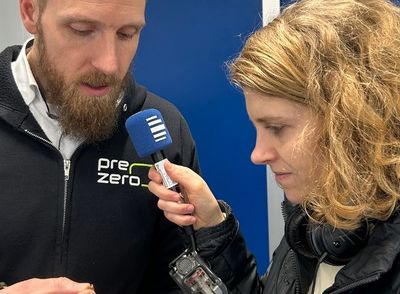
The project has been drawing strong media attention, most recently bringing Deutschlandradio reporter Melina Feldmann to PreZero's site in Neckarsulm to see the Black Soldier Fly (Hermetia illucens) firsthand. The resulting feature, broadcast on Deutschlandfunk Kultur, highlights a circular solution that may seem like a vision for the distant future but is already happening in the Neckar-Odenwald region.
“They’re nature’s recyclers.”
— Mark Ebeling, Head of Circular Organics, PreZero International
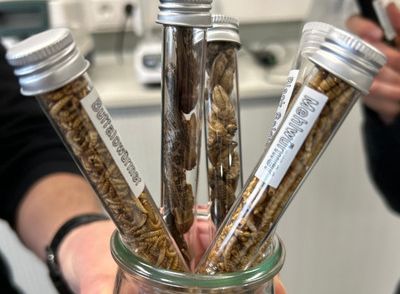
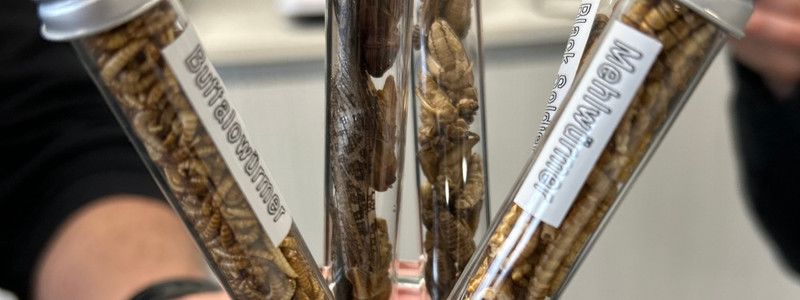
The concept is straightforward: food no longer suitable for consumption — a mouldy apple, an unsellable net of mandarins, etc. — is fed to Black Soldier Fly Larvae, which turn it into protein-rich biomass. Once dried, the larvae can be processed into animal feed for pets and livestock, and even serve as a raw material source for lubricants and adhesives used in the industry. The facility will be the first of its kind in Europe which is designed specifically to handle packaged retail food at industrial scale.
AWN Managing Director Matthias Ginter sees the site in Buchen as the ideal location for the project: “We have a major waste management site here, with more than 20 hectares of space. The buildings are already here, the infrastructure is already in place, and we have access to renewable heat and electricity. So I think bringing a project like this into this environment makes a lot of sense.”
One major challenge still lies ahead. EU regulations currently classify the Black Soldier Fly as livestock — meaning the same restrictions introduced after the BSE crisis of 2001 apply, limiting the larvae’s diet to vegetarian waste from supermarkets. In the long run, AWN and PreZero hope to use material from household organic waste bins, but this will require a dedicated regulatory framework. “We’re convinced that municipal organic waste is suitable for insect rearing,” says Matthias Ginter, “so we hope policymakers will put the right legal framework in place to make that possible.”
Construction of the refinery in Buchen is due to begin in late summer 2026, with PreZero planning to start industrial insect production in early 2027. The project has already received strong backing from the Ministry of Agriculture, the Ministry of Environment, and regional authorities as part of Baden-Wuerttemberg’s bioeconomy strategy.
Listen to the Full Report
The full Deutschlandradio feature is available online and in the free Deutschlandfunk app. Listen to the report at:
To learn more about the black soldier fly project, visit: https://prezero-black-soldier-fly.com/
More information about PreZero can be found at our press portal