
Plastic Recycling

From baled plastics to recycled polymers for reliable material streams
Verschiedene weiße Kunststoffverpackungen wie Becher, Flasche und Blister schweben vor hellblauem Grund

Economical plastic recycling

Recylates with clearly defined specifications

Plastic streams only become economically viable when quality, availability and suitability for use are all aligned. This is precisely what matters in plastic recycling. We match baled material from commercial and post-consumer streams with industrial demand for recyclates and flakes.

Whether it’s LDPE 98/2 film, rPET from deposit-return schemes or regranulates for injection moulding and extrusion – we supply materials with clear specifications and consistent availability. This turns plastic recycling into a reliable raw material stream within the plastics cycle.

Plastic recycling: From plastic waste to industrial secondary raw materials

Plastic recycling describes the processing of plastic waste into reusable raw materials such as recycled materials or flakes. The aim is to keep materials within the plastics cycle and reuse them in industrial applications.

Our three portfolio pillars for plastic recycling and recovery
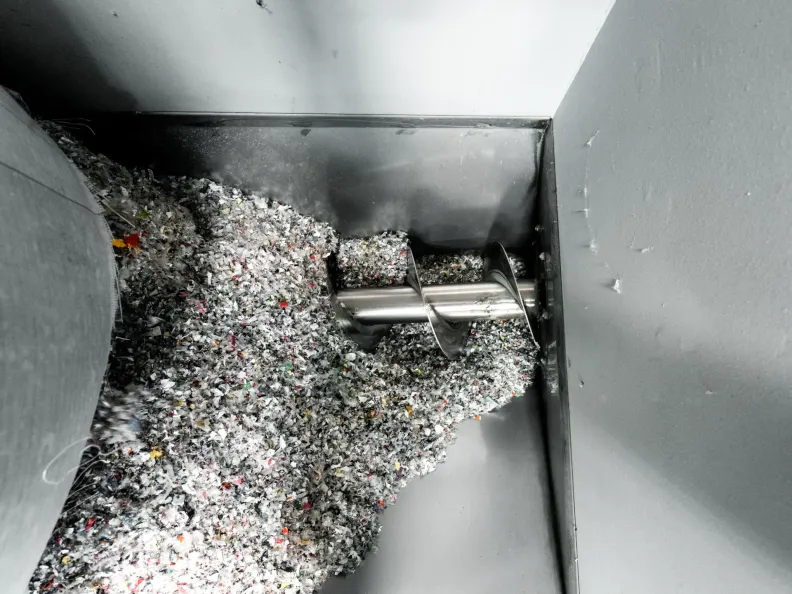
Analyse: Ein technischer Blick von oben in einen Trichter aus Edelstahl. Eine metallische Förderschnecke transportiert eine große Menge geschredderten Materials

Pillar 1: Recyclates and flakes for industrial applications

When purchasing regranulate, consistent quality and reliable specifications are of paramount importance. We supply plastic regrind for B2B customers as well as regranulates made from rHDPE, rLDPE and rPP – tailored to your application in injection moulding, blow moulding and extrusion.

Depending on your requirements, our materials can fully or partially replace virgin plastics and support the use of PCR in your production.

You will receive:

  • Regranulates with defined technical properties
  • Materials for injection moulding, blow moulding and extrusion processes
  • Tailored solutions depending on your application and quality requirements
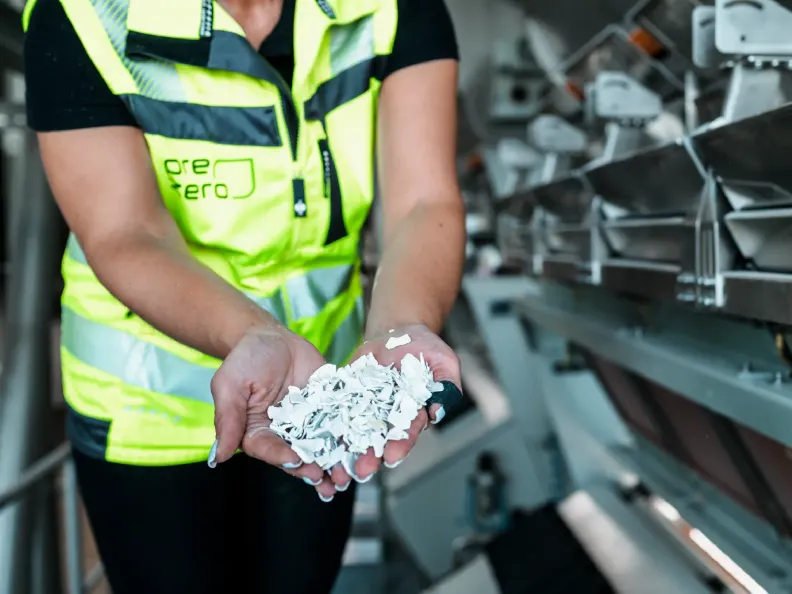
Eine Nahaufnahme. Eine Person in einer leuchtend gelben PreZero-Warnweste hält eine Handvoll kleine, weiße Kunststoff-Flocken (Rezyklat) in ihren Händen. Der Hintergrund ist unscharf, zeigt aber eine hochmoderne, metallische Sortieranlage mit Schütten und Förderbändern

Pillar 2: PET recycling from DRS and other sources

For many applications, PET quality determines whether recycled material is suitable for production — particularly for food-related applications.

We process post-consumer PET from deposit return systems (DRS), household collection schemes and commercial sources into high-quality PET flakes and recycled polymers.

As a PET flake producer, we supply hot-washed PET flakes with clearly defined specifications. Where appropriate, we also provide EFSA-compliant rPET suitable for bottle-to-bottle and tray-to-tray recycling processes.

You benefit from:

  • rPET flakes from DRS and other secure material streams
  • Full material traceability
  • Reliable supply volumes for continuous production
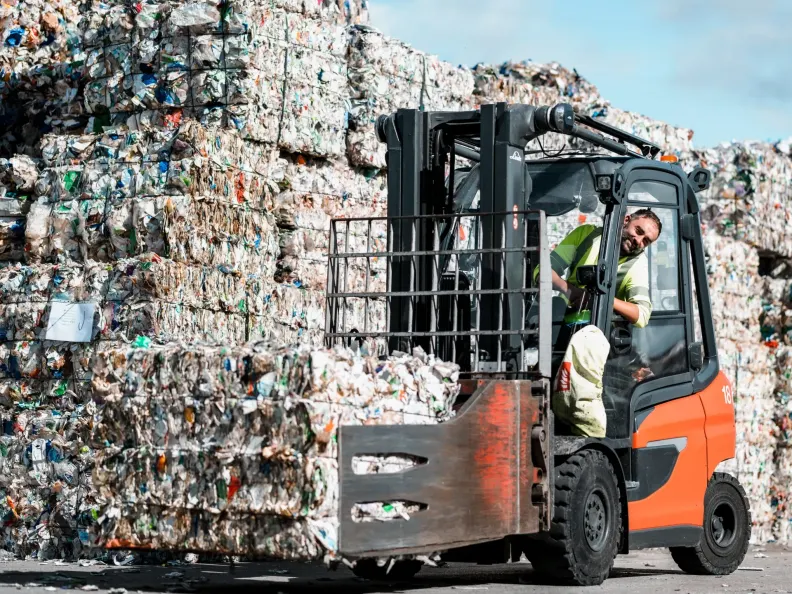
Eine Außenaufnahme bei Tageslicht. Ein lächelnder Mann in Warnweste und Warnhose sitzt in einem orange-schwarzen Linde-Gabelstapler. Er transportiert einen großen Ballen aus gepressten Kunststoffflaschen. Im Hintergrund stapeln sich riesige Wände aus ähnlichen Recycling-Ballen

Pillar 3: Raw Materials Trading and Baled Goods

For many applications, the quality of PET determines its suitability for use. For the economic recycling of plastics, reliable sales channels for baled goods are essential.

We purchase baled goods from commercial and post-consumer streams – including LDPE, PET and PP. Single-grade LDPE 98/2 films are in particularly high demand, and we market these throughout Europe.

As part of our LDPE 98/2 marketing activities, we also channel mixed grades such as 90/10 or coloured films into suitable recycling channels. This ensures your material remains recyclable and predictable. Our film marketing service combines collection, processing and trading into a stable sales channel.

You receive:

  • predictable off-take for your baled goods
  • transparent marketing with clear quality requirements
  • Europe-wide logistics and legally compliant plastics recycling
  • baled goods as a standardised raw material stream

Ballenware als standardisierter Rohstoffstrom

Baled material consists of compressed plastic waste from commercial sources or collection schemes, which is traded and processed according to quality (e.g. LDPE 98/2). It forms the basis for the production of recycled materials.

Frequently asked questions about plastic recycling and plastic recovery

MFI values are tested on a batch-by-batch basis and maintained within defined tolerances. Technical data sheets and Certificates of Analysis (CoA) are available for every delivery for applications such as injection moulding and extrusion.

Regranulates and flakes made from rLDPE, rHDPE, rPP and PET are available. MFI ranges, colours and grades vary by material source and processing method and can be tailored to the intended application.

rPET from DRS systems is processed using multi-stage hot-wash processes. For suitable applications, EFSA-compliant rPET can be supplied for use in bottle-to-bottle or tray-to-tray processes.

Odour reduction is achieved through washing processes, mechanical processing and degassing. Where required, the material can be further adapted to meet requirements for low-odour products.

The transition typically follows a structured process: analysing material requirements, selecting suitable recyclates, sampling, testing and scaling up production. Adjustments are made to processing, quality and logistics throughout the process.

LDPE 98/2 describes a purity level of 98% transparent LDPE film and a maximum of 2% foreign matter or coloured components. This grade is considered the standard for high-quality film recycling.

Single-grade material streams take priority. Mixed grades, such as 90/10 or coloured films, are assessed based on their composition and channelled into suitable recycling routes.

Transport and collection are handled through a Europe-wide logistics network. Planning is based on material volumes, bale quality and loading location. Common transport solutions include walking-floor trailers and standard trailers.

Recycling processes can be certified to standards such as EuCertPlast or RecyClass. In addition, there are requirements regarding traceability and documentation throughout the supply chain.

Recycled materials enable an increase in the proportion of recycled content in packaging and thus support key requirements of the PPWR. Material quality, availability and documented origin are crucial.

For materials from our own facilities, specific CO₂ data based on life cycle assessments (LCA) can be provided. For materials sourced through partner networks, reference values can be provided when sufficient data is available.